Part of my masters thesis research at Utah State University was to collect data on the representation of thylacines in artwork on the internet. So naturally, I made a tumblr to help track and share this collection. Tumblr is a social media-based blogging site. You can check out my still active tumblr page by clicking the link above (although it has not been updated recently!). Through my use of the site, I noticed a large amount of users that shared my interest in thylacines. I had found a site that was capable of helping me track data I could then analyze through my folkloric lens, once enough was collected.
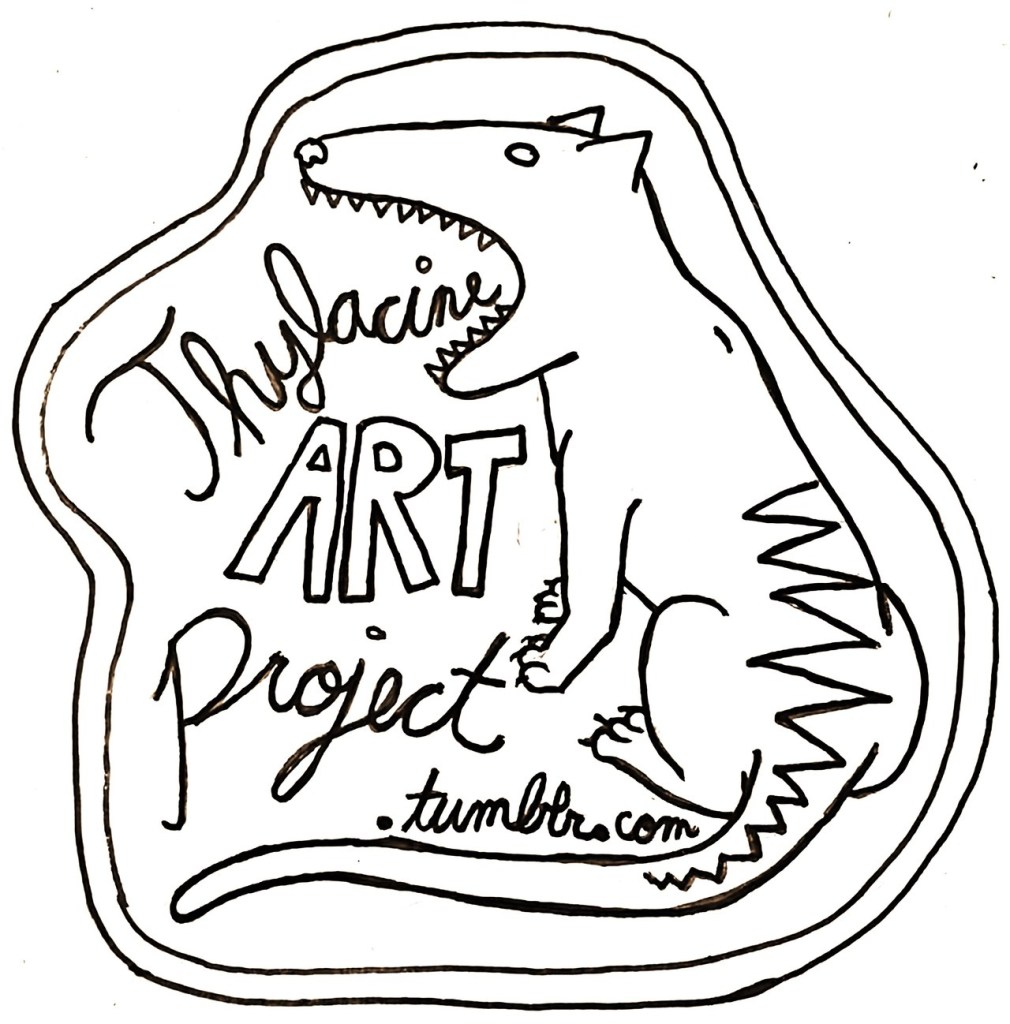
A sort of brand I created to draw attention to my tumblr archive of thylacine artwork. I drew a thylacine with an open mouth and “thylacine art project . tumblr . com” in open space around it. I eventually made about 50 die cut stickers of this image, and I still catch them on the laptops and water bottles of old friends and mentors today.
This research eventually resulted in my first solo publication, “Giving Life To Legends: Material Representation of Ostensive Behavior” which was published in the Winter 2023 issue of Western Folklore.
But that article did not use as much of this data as I thought it would – most of it ended up in the thesis version of this work. But, this work was too meaningful not to share with you in some form. It is an example of my early forms of documentation I practiced while learning to conduct and record folklore research online. It is also an example of my analytical process – you can peek inside my mind in those early days of thinking and research.
I think it is important to share these research processes with you all as a form of transparency, learning, and reflection of this work and what it means to grow through folklore.
Excerpt from Thylacine Dreams: The Vernacular Resurrection of an Extinct Marsupial
“Before I even began this research, I noticed the frequency of the thylacine in my internet life. In 2014, I opened a Tumblr account dedicated to tracking the thylacine artwork I found online. Tumblr’s “dashboard” (or “home page”) feature can be customized to each individual’s preferences through choice. People choose which blogs or type of content they wish to follow, and tailor it to their own interests. I chose to follow thylacine, zoology, cloning, climate change, and biology and ecology-related content to become better acquainted with subjects related to the thylacine. Though this project held varying degrees of my attention over the years, I never stopped sharing the artwork the came up on my Tumblr “dashboard” when I saw it. My master’s thesis has allowed me to dedicate more time to this project and expand it to other websites as I have previously described. Over the course of the last five years, I have seen hundreds, if not thousands, of drawings and artwork referencing the thylacine.
I have identified three categories of thylacine representation with which to analyze the artwork I have collected online: anthropomorphized, fictionalized (with subcategories of nice vs. mean), and realistic. I settled on these specific categories based on the emic trends I observed online in thylacine art. I also believe that each of these categories represents a particular relationship and discussion connected to the representation of thylacines and thylacine legends today. I included an example from my viewing to further illustrate each of categories below their descriptions. Anthropomorphized art is created primarily by a group of people online who self-identify as Therians or Furries, as an expression of their identification with an animal. The furry community “often [identifies] with, and may wish to assume, characteristics of, nonhuman animals” (Gerbasi 198), whereas therians believe they truly are the animal they represent themselves through an avatar. I focus on furries for this thesis because this is a more common identity of those making anthro-thylacine artwork. In this particular art form, the thylacine is drawn with human features, often bipedal, wearing clothing, and having human hair and other features (see Figure 8). This category poses many questions related to identity of the thylacine, and embodiment of legend motifs connected to its extinction and possible present existence.

Figure 8 “tidaltigerThyla” example of Anthropomorphized Thylacine Art
The category I call “fictionalized” encompasses a wide range of artistic styles and mediums. I define this category through representing the thylacine as a thylacine, with the added mix of a particular un-realistic, or more animated artistic style. This category includes depictions beyond 2D art as well, encompassing fiber arts and sculpture. I have also subdivided this category into “nice” vs “mean” depictions of the thylacine’s mood and behavior within the artwork20 (see Figure 9). This highlights some of the more nuanced changes in its depiction over time and informs the data on how the behavior and personality of the thylacine is currently being represented.

Figure 9 “reapersunThyla” example of Fictionalized, Nice Thylacine Art
The third and final category I am choosing to analyze is that of realistic depictions. This includes representations of the thylacine with anatomical correctness, in its natural habitat, or as a reference sketch to compare carnivorous builds to other animals (sometimes in comparison to drawing wolves or dogs). This category is often seen in fine art as well (see Figure 10).

Figure 10 “russako_artThyla” example of Realistic Thylacine Art
Every image I found, regardless of type, included the stripes of the thylacine as a key marker that it was in fact a thylacine, and not a wolf or other animal. This has been a unanimous method for vernacular thylacine depiction no matter the decade the original art was produced. I also tracked whether or not the thylacine was depicted with its mouth open in the artwork, as this a key factor in evoking the connected legends. Additionally, I noted whether the art piece referenced the extinction of the thylacine explicitly, implicitly, or was left unmentioned. Photos of the artwork uploaded were almost always “tagged” on Tumblr with the hashtag “thylacine” and/or “Tasmanian tiger” to make their artwork thematically easier to search online. This “tag” would lead people interested in the subject to find it more readily on the website it was posted. All the artwork I documented was created within the last ten years, and then uploaded to either DeviantArt or Tumblr. All artwork was originally posted in English, though it is difficult to determine if this was the artist’s native language. The importance of this lies in a Western-leaning form of communicating about this animal and the surrounding culture it is connected to.
An official tally yielded these results (see Table 1): out of a total of thirty documented 2-D art pieces, ten (33%) were categorized “realistic,” four (13%) were anthropomorphic, and sixteen (54%) were “fictionalized.” Of the fictionalized representations, four (25%) were “mean,” two (13%) were “neutral” and ten (62%) were “nice.” This is a striking difference from traditional and scientific representations of the thylacine, which depict the thylacine growling, hunting, or generally more suspicious looking in crouching and otherwise defensive positions. Sixteen documented pieces (53%) represented the thylacine with its mouth closed. This was a surprising result, as the most recognizable images of the thylacine depict it with a mouth wide open. This depiction, though only slightly more common than the eye-catching wide mouth so indicative of historic thylacine drawings, reflects the shift in perceptions of the thylacine from a scary sheep-killing and generally murderous animal to a more likeable and friendly creature. Often, the thylacine in these representations were smiling or were drawn with a neutral curiosity, again illustrating the shifting trend in representation to a kinder, intelligent animal.
Only eight (27%) of the total documented pieces referenced extinction at all, and of that, only one explicitly referenced extinction within the piece. Others either implied extinction within the work itself or mentioned it explicitly within the caption connected to the image, which I also included in my data collection. This indicates not only a reference to emic knowledge about the history of the thylacine, but allows a newer thylacine enthusiast to wonder, and perhaps investigate the subtle reference and story behind it.
Table 1: Data Collected of Viewed Thylacine Artwork Online


These results illustrate an overview of trends and themes of modern thylacine folk art found on the internet. It is clear from these results that the folk’s perception of the thylacine has shifted: there is much more equal representation of the thylacine as friendly and ferocious. This study could benefit from collecting more artwork over time and increasing the sample size to further specify the frequency of trends and production of artwork over time. It could also work to compare folk representations of the thylacine over the twentieth century to further compare and illustrate the contrast between institutional representations of this animal. Additionally, it could compare different mediums of artwork more readily to assess the differences between types of media chosen to represent the thylacine. The following section takes a closer look at individual artist’s interpretation of their work and connection to the thylacine for each of the three major categories previously outlined.”
 Daisy Marie Ahlstone
Leave a comment